Less Seen, Better Remembered: The Case for Promotional Restraint in an Age of Overexposure
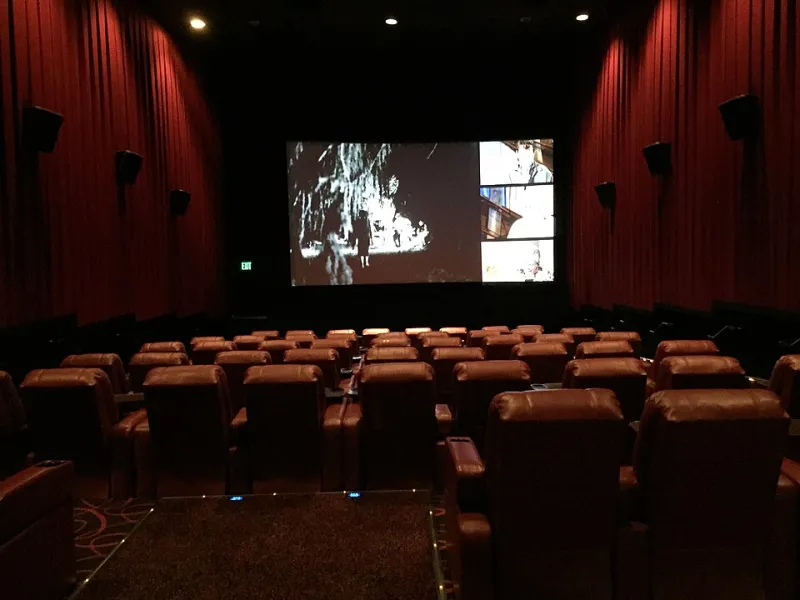
Photo: Famartin, CC BY-SA 4.0, via Wikimedia Commons
Consider two films releasing in the same calendar year. The first arrives preceded by four trailers, a Super Bowl spot, three featurettes, a behind-the-scenes documentary series, and a promotional campaign that has placed its central imagery on every available surface for six months. The second surfaces with a single teaser, one full trailer released three weeks before opening, and almost no additional material. Which film do you remember more clearly?
For anyone who has watched the modern promotional cycle with sustained attention, the answer is frequently the second one. This is not a coincidence, and it is not simply a matter of taste. There is a documented, psychologically grounded relationship between the volume of pre-release material available to audiences and the diminishing emotional return they experience when the actual film arrives.
The preview paradox—the phenomenon by which more early footage correlates with a weaker ultimate reception—is one of the more counterintuitive patterns in contemporary entertainment, and it deserves more rigorous examination than it typically receives.
The Mechanics of Anticipation
To understand why promotional saturation undermines the films it promotes, it helps to understand what anticipation actually does to the viewing experience. Psychologically, anticipation is a form of pre-consumption. When audiences watch a trailer, they are not merely receiving information about a film—they are beginning to experience it. The emotional responses generated by a well-constructed two-and-a-half-minute preview are real, even if they are incomplete.
The brain's reward circuitry does not distinguish cleanly between the anticipation of an experience and the experience itself. Each trailer viewed, each clip shared on social media, each behind-the-scenes image processed represents a partial release of the emotional energy that would otherwise be preserved for the theatrical experience. By the time a heavily promoted film actually opens, audiences have frequently already consumed a significant portion of their available emotional investment in the property.
This explains why the most common complaint about overhyped blockbusters is not that they are bad films—many are technically proficient and narratively competent—but that they feel somehow smaller than expected. The expectation was not miscalibrated; it was simply pre-spent.
The Restraint Case Studies
The evidence for promotional restraint producing superior audience outcomes is not purely theoretical. Several of the most critically durable and commercially successful American films of the past two decades arrived with notably limited pre-release exposure.
Christopher Nolan has built a directorial career partly on the discipline of his promotional strategy. His productions routinely release a single substantial trailer followed by minimal additional material, and his opening weekends have consistently outperformed comparable productions with far more aggressive promotional footprints. The audience arrives with curiosity intact rather than appetite exhausted.
The original Blair Witch Project remains the most extreme example of promotional restraint producing outsized results—a marketing approach built almost entirely on withholding rather than revealing, which generated audience curiosity that translated directly into a cultural phenomenon. More recently, the deliberate scarcity of pre-release material for certain prestige productions has allowed word-of-mouth to function as the primary promotional engine, producing the kind of sustained theatrical runs that heavily pre-marketed blockbusters rarely achieve.
Contrast these with the pattern observable across major franchise entries that have underperformed relative to their promotional investment. The Terminator franchise's later installments, various DC Extended Universe entries, and several high-profile animated sequels all shared a promotional approach characterized by volume: multiple trailers revealing significant plot points, extensive featurette coverage, and early access screenings that generated review coverage weeks before opening. In nearly every case, opening weekend audiences reported a sense of familiarity that undermined the viewing experience—they had, in effect, already seen the film.
The Industry's Structural Incentives
If the evidence for promotional restraint is reasonably compelling, the obvious question is why studios continue to pursue saturation strategies. The answer lies in the misalignment between the metrics that promotional departments are evaluated on and the outcomes that actually determine a film's long-term value.
Marketing teams are measured on awareness, engagement, and opening weekend numbers. Trailers that generate high view counts and social media discussion produce measurable metrics that justify budgets and careers. The slower, harder-to-quantify value of preserving audience anticipation does not translate easily into a quarterly report.
Furthermore, the theatrical window has compressed significantly over the past decade. With streaming availability arriving weeks rather than months after theatrical release, studios are under pressure to maximize opening weekend performance at the expense of the longer theatrical runs that once rewarded films with strong word-of-mouth. This structural pressure reinforces the saturation instinct: if the window is short, front-load the awareness at any cost.
The result is a promotional ecosystem that is optimized for the wrong outcome—generating awareness rather than preserving the quality of the first encounter.
What Audiences Actually Lose
The cost of promotional saturation extends beyond the individual viewing experience. When audiences arrive at a film having already processed its most striking images, its emotional peaks, and its narrative turning points through trailer coverage, they are denied the specific pleasure that theatrical film was designed to deliver: the experience of encountering something genuinely new.
This is not a nostalgic complaint about the superiority of past eras. It is an observation about function. The theatrical environment—the scale, the darkness, the shared attention of an audience—amplifies the impact of genuine discovery. When that discovery has been pre-empted by months of promotional material, the theatrical environment becomes merely a higher-quality delivery mechanism for something already consumed. The premium that audiences are asked to pay, in both ticket price and time, becomes harder to justify.
The downstream effect on critical reception is also worth noting. Critics who screen films after extensive promotional campaigns are not immune to the preview paradox. The capacity for genuine surprise—one of the more powerful levers available to a skilled filmmaker—is significantly diminished when a reviewer has already processed the film's most technically impressive sequences through trailer coverage.
The First Look Question
At PreRevi, the first look is not merely a content category—it is a philosophical commitment to the idea that initial encounters with entertainment properties matter and deserve careful attention. The preview paradox challenges that commitment in an uncomfortable way: it suggests that, in some cases, the best first look is a deliberately incomplete one.
The studios capable of resisting the saturation impulse—of trusting that a single well-constructed trailer can do more promotional work than six mediocre ones—are not simply making a tactical choice. They are making an argument about what the theatrical experience is worth preserving. That argument is increasingly difficult to make in an industry structured around quarterly metrics and shrinking windows.
But the films that make it tend to be the ones audiences remember.