The Breaking Point: A Framework for Identifying When Franchise Sequels Begin Spending Legacy They No Longer Have
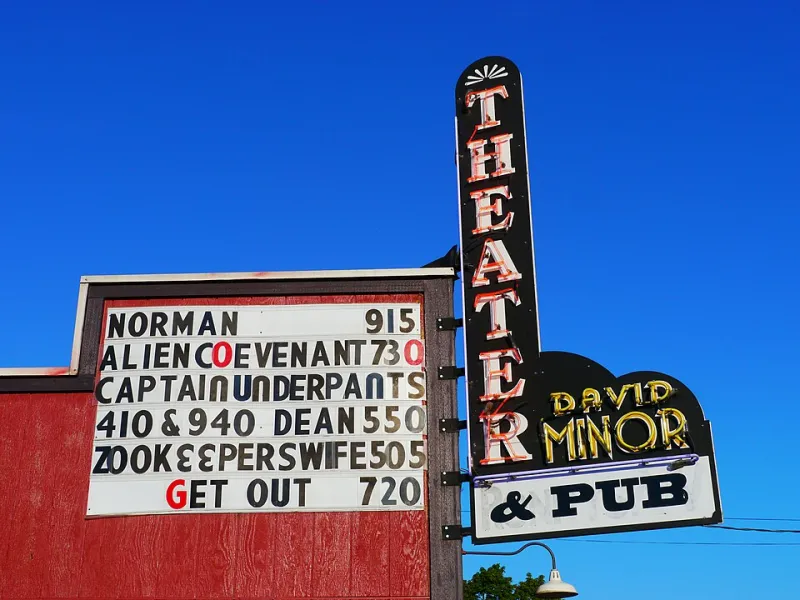
Photo: Rick Obst, CC BY 2.0, via Wikimedia Commons
Every franchise operates on credit. The goodwill accumulated through a strong original film, or a series of consistently satisfying entries, constitutes a form of reputational capital that studios draw upon when launching sequels. Audiences show up not purely because the marketing has persuaded them, but because prior experience has established trust. They are, in a meaningful sense, prepaying for an experience they expect to be worthwhile.
The problem is that this credit is finite, and studios have historically been poor accountants of it. The entertainment industry's structural incentives — quarterly earnings pressure, franchise IP as balance sheet asset, global theatrical windows requiring massive marketing expenditures — push relentlessly toward more sequels, more frequently, regardless of whether the creative conditions that generated the original goodwill remain intact.
The result is a predictable pattern: a franchise reaches a breaking point at which audience loyalty collapses faster than marketing spend can compensate for it. Understanding where that point lies — and recognizing the warning signs before a film enters production, let alone opens in theaters — is one of the most practically useful forms of entertainment analysis available.
Constructing the Franchise Fatigue Index
Any credible framework for measuring franchise exhaustion must draw on multiple data streams simultaneously. Box office trajectory alone is insufficient; a sequel can underperform domestically while overperforming internationally, masking underlying audience disengagement. Critical scores in isolation are equally misleading; critics and general audiences frequently diverge sharply on franchise entertainment, with critics penalizing formula and audiences rewarding comfort.
A more reliable composite picture emerges from tracking five variables across successive installments:
Opening weekend multiplier decay: The ratio between opening weekend gross and total domestic run narrows as franchise fatigue sets in. Audiences who show up on opening weekend out of habit increasingly do not recommend the film to others, compressing the theatrical tail.
CinemaScore trajectory: CinemaScore grades, collected from opening-night audiences, provide a leading indicator of word-of-mouth momentum. A franchise whose CinemaScore has declined across two consecutive installments — even if the grades remain nominally positive — signals eroding audience satisfaction among its most committed viewers.
Audience score versus critic score divergence: A widening gap between Rotten Tomatoes audience scores and critic scores, particularly when both are declining simultaneously, indicates that a franchise has lost the ability to satisfy either constituency.
Pre-release tracking movement: Industry tracking surveys measure purchase intent among four audience quadrants over the weeks preceding release. A franchise installment that shows declining tracking numbers relative to its predecessor — especially among females under 25, historically the most reliable bellwether for broad commercial appeal — is approaching critical mass.
Search and social sentiment velocity: The ratio of positive to negative sentiment in social media conversation about a franchise installment in the weeks following its announcement provides an early read on whether legacy goodwill remains intact.
Case Study: The MCU Inflection Point
The Marvel Cinematic Universe represents the most extensively documented case of franchise goodwill management in Hollywood history. Between 2008 and 2019, the franchise achieved something genuinely unprecedented: sustained audience enthusiasm across 23 films, with each new entry leveraging the accumulated goodwill of the preceding catalog.
The post-Endgame phase, however, offers a textbook illustration of what happens when the production pipeline outpaces the creative conditions that originally generated trust. Ant-Man and the Wasp: Quantumania opened in February 2023 to $106 million domestically — a strong number in isolation, but a significant decline from the $75 million opening of the original Ant-Man adjusted for franchise equity expectations, and a CinemaScore of B that signaled meaningful audience dissatisfaction. The film earned a 46% critical score on Rotten Tomatoes, the second-lowest in franchise history at that point.
The MCU's subsequent performance suggests the franchise had crossed a breaking point — not into irrelevance, but into a zone where the automatic goodwill premium that had reliably inflated opening weekends was no longer operative. The Marvels in November 2023 opened to $46 million domestically, the lowest opening weekend in franchise history, despite carrying the legacy of both Captain Marvel and the WandaVision streaming series.
Critically, this collapse did not occur because the films were uniformly poor. It occurred because the frequency of release had exhausted the audience's capacity to maintain active engagement with every entry. The franchise had confused volume with value.
Franchises That Recovered — and How
Franchise fatigue is not invariably terminal. Several major series have demonstrated the capacity to recover from a low point, though the mechanism of recovery is instructive.
The Mission: Impossible series entered a credibility trough with Mission: Impossible II (2000), which received mixed reviews and generated audience sentiment that questioned whether the franchise had creative ambition beyond its action set pieces. The recovery, engineered over the following two installments, involved a deliberate course correction: returning creative authority to a single strong director in J.J. Abrams for the third film, and subsequently establishing a consistent creative partnership with Christopher McQuarrie that prioritized practical stunt work and character continuity over spectacle alone.
The Fast & Furious franchise navigated a different kind of recovery. After the first three installments produced diminishing returns, Fast & Furious (2009) functioned as a soft reset — reuniting the original cast and recommitting to the core emotional premise of family loyalty that had made the original film resonate. The strategy generated $155 million domestically on a modest budget, reestablishing commercial viability and enabling the extraordinary run of the subsequent decade.
Both recoveries share a common element: they involved genuine creative recommitment rather than marketing repositioning. Audiences, it turns out, are reasonably good at distinguishing between a franchise that has been revitalized and one that has simply been rebranded.
The Franchises Currently Approaching the Threshold
Applying the Franchise Fatigue Index prospectively — which is, after all, the core purpose of this analysis — several major upcoming installments display warning indicators worth monitoring.
The Transformers franchise, despite periodic attempts at creative reinvention, has demonstrated a consistent pattern of declining domestic opening weekends relative to production budget. The nostalgia-driven Bumblebee (2018) temporarily arrested this decline, but subsequent entries have struggled to consolidate that recovery.
The DC Universe is in the midst of a supervised restructuring under James Gunn and Peter Safran that explicitly acknowledges prior franchise exhaustion — a rare instance of a studio publicly conceding a breaking point had been reached and implementing a corrective framework rather than continuing to draw on depleted goodwill.
Perhaps most significantly, the Indiana Jones franchise's fifth installment, Indiana Jones and the Dial of Destiny (2023), opened to $60 million domestically against a reported $295 million production budget — a stark illustration of what happens when legacy alone is insufficient to generate contemporary commercial momentum.
The Predictive Value of Early Signals
For audiences and analysts alike, the practical value of the Franchise Fatigue Index lies in its predictive application. A franchise installment that enters its announcement phase with declining tracking numbers, a predecessor with a CinemaScore below B+, and social sentiment that skews negative is not merely at risk of underperformance — it is statistically unlikely to recover its goodwill position through marketing alone.
Studios that recognize this early retain options: creative course corrections, release date repositioning, or the most underutilized tool in franchise management — a deliberate pause. Allowing an audience to miss a franchise is a legitimate strategy. Forcing attendance through sheer volume is not.
PreRevi will continue monitoring the pre-release indicators across major franchise installments as they approach their announcement windows. The first impression, as always, is where the final word begins.