The Last Note Changed: What Silent Score Replacements Reveal About a Film's Final Hours
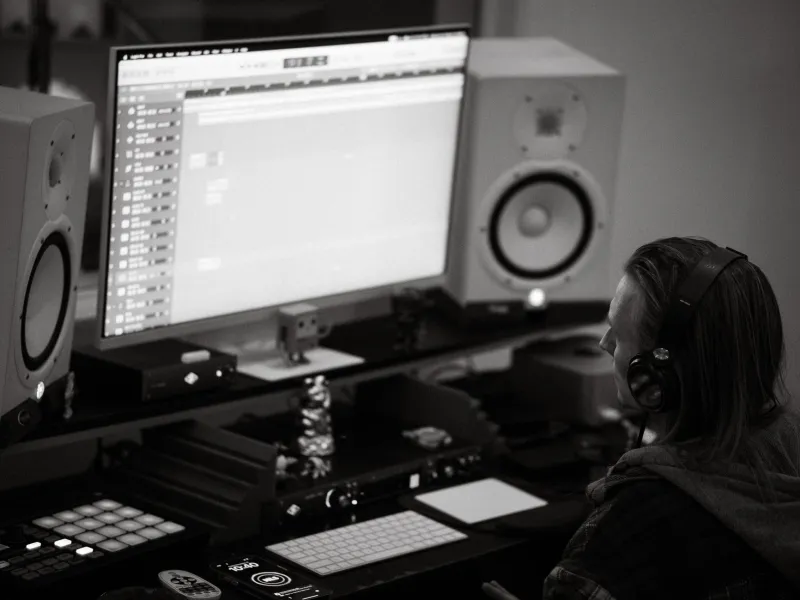
By the time a film's marketing campaign reaches full velocity — trailers saturating social feeds, posters colonizing subway stations, talent appearing on late-night television — most audiences assume the creative work is finished. What they rarely consider is that, in a significant number of cases, the music they will hear in theaters is not the music that existed six weeks prior. A composer's months of work may have already been quietly set aside, replaced by an entirely different score assembled under deadline pressure and delivered with no public announcement whatsoever.
This is the rescore shuffle: one of the least visible and most revealing practices in contemporary studio filmmaking.
A Decision Made in the Dark
Score replacements are not new. The history of Hollywood is punctuated by famous instances in which a director or studio parted ways with a composer's work at the eleventh hour. What has changed is the frequency, the silence surrounding these decisions, and what they now signal about the broader ecosystem of pre-release anxiety.
The modern rescore rarely generates a press release. Composers are often bound by contractual language that discourages public comment. Studios, understandably, have little incentive to advertise that a film's emotional architecture was considered inadequate weeks before opening weekend. The result is a category of significant creative upheaval that passes almost entirely beneath public notice — until, occasionally, a sharp-eared critic notices that the music in a finished film sounds nothing like what appeared in its trailers.
That discrepancy, minor as it may seem, is frequently the only visible trace of a much larger intervention.
Test Screenings and the Emotional Audit
To understand why rescores happen, it is necessary to understand what studios are actually measuring when they conduct late-stage test screenings. Audience response cards and dial-testing sessions are not designed primarily to evaluate plot or performance. They are emotional audits — attempts to identify precisely where a film's affective grip loosens, where viewers disengage, where a sequence that should land with weight instead passes without impact.
Music is, in this context, among the most powerful variables in the room. A score that telegraphs emotion too bluntly can make sophisticated audiences feel manipulated. One that is too restrained can leave sequences feeling inert. When test audiences consistently mark certain scenes as flat or unconvincing, the diagnosis is not always a structural problem. Sometimes it is a tonal one — and tone, in film, is substantially a musical construction.
A rescore, then, is frequently a studio's attempt to correct an emotional miscalibration without reopening the edit. It is cheaper than reshoots, faster than recutting, and, crucially, invisible to anyone not present in the dubbing stage.
What the Silence Communicates
From a pre-release analysis standpoint, the absence of information is itself informative. PreRevi's editorial framework is built on the premise that what studios choose not to say before a film opens is often more revealing than what they announce. Score replacements operate entirely within that negative space.
When a major release cycles through two composers in the final months of post-production, that fact almost never surfaces in entertainment coverage until after the film is in theaters — sometimes not even then. The original composer may receive no screen credit, or may be listed in a manner that obscures the scope of their contribution. The replacement composer may be credited in full, with no indication that their work was assembled under extraordinary time pressure.
The practical consequence is that audiences enter theaters without any awareness that the film's emotional language was considered broken and subsequently rebuilt. Critics writing first-look coverage from advance screenings are evaluating a musical experience that may have been assembled weeks earlier under conditions of significant institutional stress.
The Composer's Position
It would be incomplete to discuss this practice without acknowledging its human dimension. Film scoring is a collaborative discipline that demands months of intimate engagement with a director's vision. A composer working on a major studio release typically begins their work from early cuts, iterating through revisions as the edit evolves, building a musical identity for the film that reflects sustained creative dialogue.
When that work is replaced, the professional and financial consequences are real — but so is the less quantifiable cost of having one's creative contribution erased from a finished work without public acknowledgment. The structural power imbalance between composers and studios means that most affected artists have limited recourse. Industry organizations have, at various points, attempted to establish clearer standards around credit and compensation in these situations, but enforcement remains inconsistent.
What this means for audiences is that the music they experience as an integrated, organic element of a film may, in fact, represent a late-stage substitution made by people working against a clock — people who may never be named in the credits they see.
Reading the Signals Before the Release
For those attempting to assess a film's trajectory before its release — whether as critics, industry observers, or engaged audiences — late-stage score activity offers a meaningful signal. A documented composer departure in the final weeks of post-production, even when framed diplomatically as a mutual creative decision, warrants scrutiny. The timing alone suggests that the separation occurred after the point at which such changes are routine.
Equally telling is the presence of multiple composers in a film's final credits, particularly when their individual contributions are vaguely defined. Credits that list a primary composer alongside an uncredited or minimally credited additional contributor often indicate that a significant portion of the finished score was assembled by someone other than the named artist — a practice that, while technically within industry norms, obscures the actual creative history of the work.
Trailer music provides another point of reference. When the musical identity established across a film's promotional campaign bears no meaningful relationship to what appears in the finished cut, the divergence is rarely accidental. It may indicate that the score heard in trailers was drawn from an earlier version of the film — one that no longer exists in the form audiences will encounter.
The Invisible Rewrite
Film criticism has long attended to the visible elements of a production: the performances, the direction, the cinematography, the script. Music has historically received less analytical attention in pre-release discourse, treated as a finishing element rather than a structural one. The growing prevalence of late-stage rescores challenges that assumption directly.
A film's score is not decoration. It governs pacing, emotional register, tonal consistency, and the degree to which audiences trust what they are watching. When that element is rebuilt in the final weeks before release — without announcement, without critical acknowledgment, under conditions of institutional anxiety — the finished film is, in a meaningful sense, a different artistic object than the one its makers originally intended to release.
That difference rarely appears in reviews. It almost never surfaces in pre-release coverage. But it shapes the experience of every person who sits in a theater and allows the music to tell them how to feel — whether they know it or not.