Sold Hard, Delivered Soft: Twelve Films Where the Marketing and the Movie Disagreed
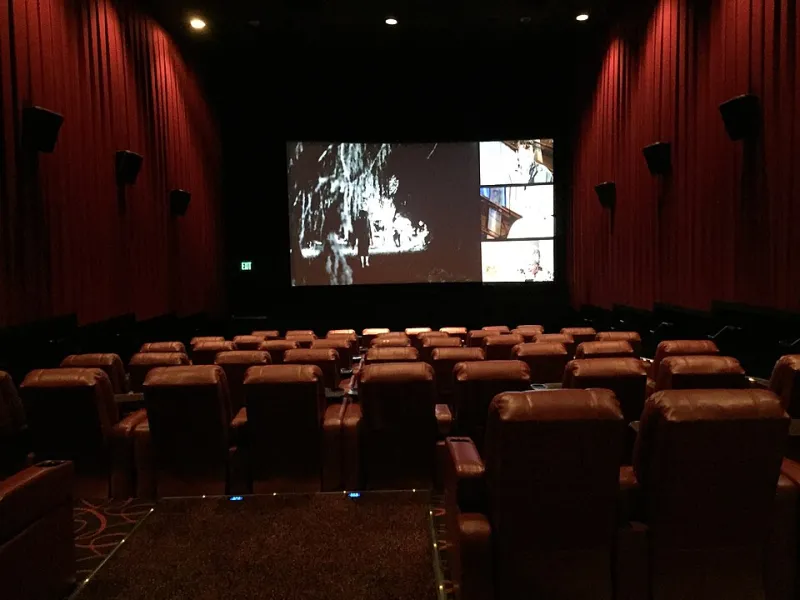
Photo: Famartin, CC BY-SA 4.0, via Wikimedia Commons
Every moviegoer has lived both disappointments. The trailer that promised a taut, chilling thriller, followed by the listless film that actually opened. And its mirror image: the movie you almost skipped because the marketing made it look like a bargain-bin action flick, only to discover one of the year's best.
These mismatches are not accidents. They are the visible seams of a promotional pipeline with competing incentives, and the twelve pairings below — seven films sold as something they were not, five great films sold badly — map those seams with surprising precision.
When the Trailer Outperformed the Film
1. The Fake-Out Thriller. A recurring modern phenomenon: the campaign built around a single shocking image or sound design cue that appears in the finished film for roughly ninety seconds. The trailer was a masterwork of suggestion. The movie had one idea and stretched it to feature length.
2. The Comedy That Used Every Good Joke. The oldest mismatch in the book, and still the most painful. When a comedy's marketing team has access to the full film months in advance, the temptation to burn the best material in the trailer proves irresistible — leaving paying audiences with a familiar, deflating sense of having already seen it.
3. The Recut Blockbuster. Every few years, a major release gets a trailer so tonally assured that audiences assume the studio found its footing late. Then the film arrives as the shaggy thing it always was, and the trailer is revealed as an act of editorial salvage — the best two and a half minutes of a two-hour problem.
4. The Misleading Genre Pivot. A drama marketed as a horror film because horror opens well in October. The campaign leaned into dread, the poster went dark, and the film itself was a slow family meditation. The audience that showed up for scares felt cheated; the audience that stayed away missed a decent picture.
5. The Song-Driven Mirage. A single needle-drop, deployed over quick cuts, can make almost any footage feel momentous. Several recent films have ridden a licensed track to an opening weekend their reviews did not support.
6. The Legacy Bait. The trailer built almost entirely on returning faces and nostalgia cues, with the new story hidden because the new story was thin. The marketing was honest about the only thing the film had to sell.
7. The Trailer That Was the Movie. Occasionally the promotional edit simply tells the whole plot in better proportion than the film does. Watching the actual movie becomes a formality.
When the Film Deserved Better
1. The Mis packaged Drama. A quiet, acclaimed film sold as a generic thriller, marketed to an audience that stayed home while the film's actual audience never heard about it. The clearest case of a campaign misreading its own product.
2. The Comedy Sold as a Slacker Romp. A sharp, structurally ambitious comedy reduced in its ads to its broadest gag, repeated. The film found its audience on streaming, months too late.
3. The Genre Film Buried by Its Studio. A well-reviewed horror or sci-fi release given a minimal campaign and a dumping-ground date — the studio signaling, through neglect, that it had already given up. Audiences who trusted the marketing's silence missed a genuinely good film.
4. The Family Film Advertised to Nobody. An animated feature with real craft, sold with incoherent spots that tested poorly with every demographic. The film's word of mouth outlived its marketing, which is both a happy ending and an indictment.
5. The Prestige Film Pretending to Be Popcorn. The rarest mismatch in reverse: a serious film marketed as mindless spectacle, which then disappointed the spectacle crowd while the arthouse crowd never considered buying a ticket.
So Who Is Responsible?
The blame rarely lands where audiences assume. Marketing teams work from footage, edits, and test-screening data they did not create; they can only be as honest as the material they are handed. When a trailer lies, it is often because the film gave it nothing true to work with. When a great film is sold badly, the failure is usually organizational — a release date chosen by a different department, a target audience defined by a spreadsheet, a campaign signed off by executives who never watched the film.
The trailer is the most viewed piece of criticism-adjacent filmmaking in America, and the film is the thing it was made to protect. When the two disagree, the audience pays for the difference at the box office — and increasingly, they remember it the next time a promising trailer crosses their feed. That memory is the only enforcement mechanism the industry has. It is working, slowly.