Reacting Before the Critics Can: How Studios Are Using Influencer Screenings to Pre-Shape Public Opinion
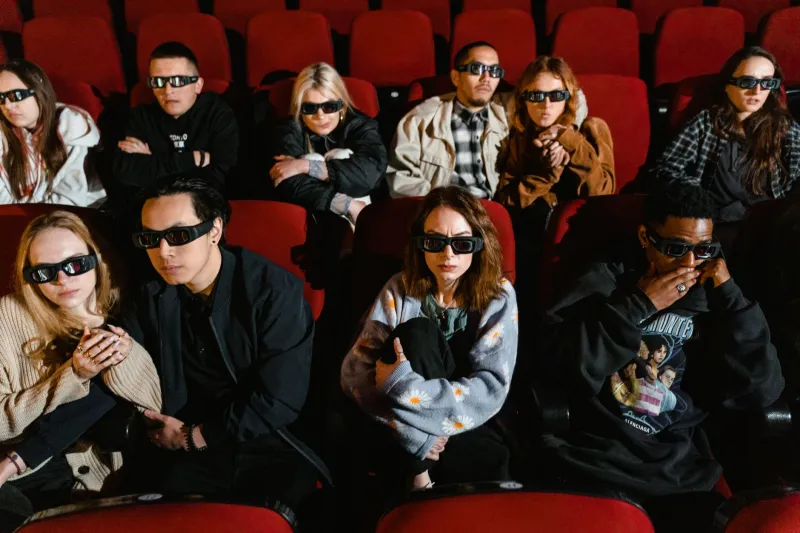
There is a moment, now familiar to anyone who follows entertainment closely, that arrives roughly two to three weeks before a major theatrical release. It does not come from a trade publication or a film critic with decades of institutional standing. It comes from a smartphone camera pointed at a tearful face in a movie theater lobby, or a thirty-second clip of someone pressing their hands together in apparent reverence, captioned with some variation of I am not okay right now.
This is not a spontaneous cultural event. It is, in most cases, a coordinated studio initiative — and it is rapidly becoming one of the most consequential tools in pre-release marketing.
The Architecture of the Influencer Screening
The mechanics are straightforward, even if the implications are not. Studios — or, more precisely, the marketing divisions and third-party publicity firms they retain — identify a pool of social media creators whose audiences align with a film's target demographic. These creators are invited to private screenings, often framed as exclusive experiences, and are typically encouraged (though rarely contractually required) to share their immediate emotional responses online.
The distinction between encouraged and required is doing a great deal of work in that sentence. Federal Trade Commission guidelines mandate that sponsored content be disclosed, and technically, a free screening invitation constitutes a form of compensation. In practice, disclosure compliance across influencer screening content is inconsistent at best. Many creators append a brief hashtag — #ad, #gifted, #partner — that is easily overlooked within the visual language of an enthusiastic reaction post. Others disclose nothing at all.
What studios receive in return is a pre-embargo sentiment wave. Traditional critics, bound by embargo agreements that prohibit publication until a studio-designated date, cannot publish. Influencers, operating in a regulatory gray zone and rarely subject to the same contractual constraints, can post immediately. The result is that by the time a film's official critical embargo lifts, the social media landscape has already been seeded with positive associations.
Why This Strategy Works — and Why It Is Different From Traditional Embargoes
The conventional critic embargo has always served a dual purpose: it protects a studio from negative reviews reaching audiences before tickets are purchased, while simultaneously creating a coordinated release of critical attention that generates press coverage. The influencer screening strategy does something more nuanced.
Rather than suppressing negative opinion, it displaces it. When a potential audience member encounters the first wave of discourse about a film, that discourse is not critical analysis — it is emotional testimony. The framing established in those initial hours is extraordinarily difficult to dislodge. Subsequent professional reviews, even negative ones, arrive into a conversation that has already been emotionally primed.
This is not a trivial distinction. Research in communications and media psychology has consistently demonstrated that first impressions in information environments are resistant to correction, particularly when those impressions are emotionally coded. A critic arguing that a film's third act collapses structurally is fighting an uphill battle against fifty creators who have already told their combined audiences that the ending destroyed them in the best possible way.
The influencer screening, in this sense, is not merely an alternative to the embargo. It is a pre-emptive override of the critical framework itself.
The Credibility Question
The studios' growing reliance on this approach raises uncomfortable questions about the nature of the discourse it produces. Professional film criticism, whatever its institutional limitations, operates within a set of understood conventions: critics are expected to disclose conflicts of interest, their outlets have editorial standards, and their assessments — positive or negative — are intended to be independent of the subject's marketing interests.
Influencer reactions, by contrast, exist in a space where the line between genuine enthusiasm and compensated promotion is structurally obscured. This is not a moral indictment of individual creators, many of whom may experience entirely authentic emotional responses to the films they screen. It is, however, an observation about the conditions under which those responses are generated and shared. A creator who receives exclusive access to a major studio screening, who is photographed on a branded step-and-repeat, who is provided with promotional materials and encouraged to share content — that creator is operating within a marketing apparatus, regardless of the sincerity of their feelings.
The audience consuming that content is rarely equipped with sufficient context to make that distinction.
What the Studio Calculates
From a purely strategic standpoint, the influencer screening model addresses a problem that traditional marketing has never fully solved: the gap between awareness and enthusiasm. A trailer generates awareness. A billboard generates awareness. What studios have always struggled to manufacture, at scale, before a film opens, is the social proof that comes from someone an audience member trusts saying, in their own voice, this is worth your time.
Influencers, by definition, have pre-existing trust relationships with their audiences. Studios are not buying advertising space when they invite a creator with two million followers to a screening. They are renting an existing relationship — one built on perceived authenticity — and inserting their product into it.
The calculation becomes particularly acute for films that studios have reason to believe may perform poorly with traditional critics. When a project's internal tracking suggests critical reception will be mixed or negative, the influencer screening offers a viable counter-narrative: audiences may not care what critics think if the social media consensus, delivered by trusted voices in familiar formats, is sufficiently positive.
The Long-Term Cost to the Discourse
PreRevi's editorial mission is grounded in the belief that early commentary and critical analysis serve audiences best when they are honest about their conditions of production. The influencer screening model, as it is currently practiced, works against that transparency in ways that should concern anyone who values the integrity of pre-release discourse.
This is not an argument for the elimination of influencer participation in film culture. Creators with genuine critical sensibilities and transparent disclosure practices contribute meaningfully to the conversation around entertainment. The problem is structural: when studios design screening programs specifically to generate positive pre-critical sentiment, and when the regulatory environment permits that content to circulate without adequate disclosure, the result is a distortion of the information landscape that audiences rely on to make decisions.
The first word on a film is increasingly not a review. It is a reaction — produced within a marketing framework, distributed through a trust relationship that audiences did not know was being leveraged, and optimized for emotional resonance over critical accountability.
For an industry that has spent decades insisting it values audience trust, that is a significant trade to have made so quietly.