Before the Embargo Breaks: How Private Screening Audiences Have Become the New Critical Authority

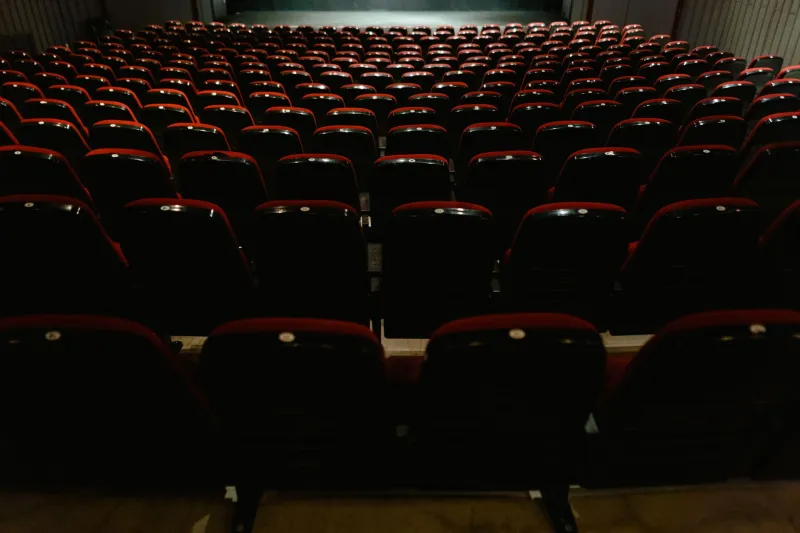
Photo by Photo by Gabriela on Unsplash on Unsplash
There is a moment, in the hours following a major early screening, when the entertainment internet holds its breath. Embargo agreements are still active. No professional publication has filed a word. And yet, somehow, a verdict is already circulating.
It arrives in fragments — a cryptic tweet from an anonymous account with three hundred followers, a buried reply thread on a film subreddit, a Discord message screenshot that migrates from server to server with the quiet efficiency of rumor. By the time the official critical consensus emerges, a significant portion of the engaged audience has already formed an opinion about whether a film is worth their time and money. That opinion was not shaped by a credentialed critic. It was shaped by someone who simply happened to be in the room.
This is the new architecture of pre-release discourse, and it is fundamentally reshaping how audiences — and increasingly, studios — understand a film's prospects before it opens.
The Informal Circuit and Its Unexpected Influence
Early screening culture has existed for decades. Studios have long invited select audiences to test screenings, and film festivals have always generated informal chatter among industry insiders. What has changed is the infrastructure through which that chatter travels and the speed at which it reaches general audiences.
Platforms like Reddit — particularly communities such as r/movies and dedicated franchise subreddits — have become aggregation points for early viewer impressions that operate entirely outside the formal review ecosystem. A user who attended a promotional screening in Los Angeles on a Tuesday evening can have their unfiltered reaction in front of fifty thousand readers before midnight. No editorial filter. No institutional affiliation. No assigned word count.
The result is a kind of grassroots critical layer that sits beneath the professional one, often contradicting it, sometimes anticipating it, and occasionally rendering it beside the point entirely.
When Audience Consensus Arrives First
Consider how frequently, in recent years, the general sentiment around a major release has been established before embargo lifts. Horror titles, in particular, have benefited — or suffered — from this dynamic. When early screening reactions for a widely anticipated genre film begin trending positive on social platforms, ticket presales respond almost immediately. The correlation is difficult to dismiss.
Conversely, when whisper networks coalesce around disappointment — when the language of early posts clusters around phrases like "not what I expected" or "the third act lost me" — that sentiment tends to depress opening weekend enthusiasm in ways that even a strong professional review aggregate struggles to counteract. Audiences, it turns out, often trust the account of someone who describes themselves as "just a fan" more than they trust an institutional byline.
This is not simply a matter of anti-establishment sentiment. It reflects something more structural: early screening attendees are, by definition, the most engaged segment of a film's potential audience. They sought out the screening. They represent the core demographic. Their reactions carry predictive weight precisely because they are not professional critics applying a formal evaluative framework — they are the target viewer responding instinctively.
The Aggregation Problem
Traditional review aggregation sites operate on a model built for a different information environment. Scores compile over days, weighted by publication tier and critical consensus. The resulting number, whatever its methodological merits, arrives late relative to the conversation that has already unfolded on social platforms.
This temporal gap matters enormously in the modern release cycle. A film that generates ecstatic early screening reactions on a Wednesday night may see its tracking numbers shift before a single review is published Thursday morning. By the time the aggregated score stabilizes, the audience has already rendered a preliminary verdict — and studios, tracking firms, and theater chains have already begun adjusting their projections accordingly.
The aggregated professional score still matters. It retains authority with certain audience segments, particularly older demographics and those less embedded in online film communities. But its role as the primary signal of a film's quality — and its commercial potential — has been significantly diluted.
Credibility Without Credentials
The obvious objection to early viewer discourse as a critical authority is its susceptibility to manipulation. Studios have, on documented occasions, seeded early screening audiences with enthusiastic supporters. Coordinated campaigns to flood social platforms with positive reactions are not hypothetical — they have occurred, and the film community has grown reasonably adept at identifying them.
Yet this skepticism has not meaningfully diminished the influence of organic early viewer consensus. Audiences have developed their own heuristics for distinguishing authentic grassroots enthusiasm from manufactured noise. The texture of genuine early reactions — their specificity, their willingness to acknowledge flaws alongside strengths, their emotional register — tends to read differently from coordinated promotional content.
In this sense, the early viewer network has developed something resembling editorial judgment, distributed across thousands of individual accounts rather than concentrated in a single institution.
What This Means for Pre-Release Analysis
For anyone engaged in the serious analysis of entertainment releases — which is precisely the mission this publication pursues — the emergence of early viewer discourse as a critical authority demands methodological adaptation.
A comprehensive pre-release assessment can no longer rely solely on professional critical consensus. It must account for the texture and velocity of early screening reactions, the platforms through which those reactions travel, and the degree to which they align with or diverge from institutional review. When the whisper network and the professional consensus point in the same direction, confidence in a prediction increases substantially. When they diverge, the divergence itself becomes analytically significant.
The screening room whisper network is not a replacement for rigorous criticism. It is an additional data layer — one that carries genuine predictive value and reflects the instincts of the most engaged segment of any film's potential audience. Ignoring it, in the current environment, is not a mark of critical rigor. It is a blind spot.
The Authority Shift Is Already Complete
It would be tempting to frame this as an ongoing transition, a gradual erosion of traditional critical authority that is still playing out. The evidence suggests otherwise. The shift has already occurred. Early viewer discourse is not emerging as an alternative critical ecosystem — it has already established itself as one, operating in parallel with professional criticism and, in many cases, outpacing it in influence.
Studios know this. Tracking firms know this. Theater chains monitoring presale velocity know this. The question now is not whether grassroots early viewer consensus matters, but how to interpret it with the same analytical seriousness that has historically been reserved for professional critical opinion.
At PreRevi, the answer to that question is built into our foundational premise: the first word and the final word on any release are rarely the same, and the most valuable analysis lives in the space between them. Early viewer discourse occupies that space more fully than ever before. Understanding it is no longer optional — it is essential.